Mycenae (Μυκήνες) is the easiest serious archaeological site to reach from Tolo: 25 km, about 30 minutes by car on the EO7. A UNESCO World Heritage Site since 1999, it was the political and military capital of Late Bronze Age Greece (c. 1600–1100 BC), home to the Atreid dynasty of Homer's Iliad. With a sensible early start you can be back at the hotel pool by 14:00.
When to visit
Aim for the 08:00 opening from April to October. By 11:00 the citadel is fully exposed to the sun and cruise-ship groups start arriving from Nafplio and the port of Tolon. Off-season (November–March) any time of day is comfortable but daylight is short — confirm closing time on the Ministry of Culture site (odysseus.culture.gr) before you set off.
What you'll see
- The Lion Gate — the oldest monumental sculpture in Europe (c. 1250 BC), still in its original position above the main entrance.
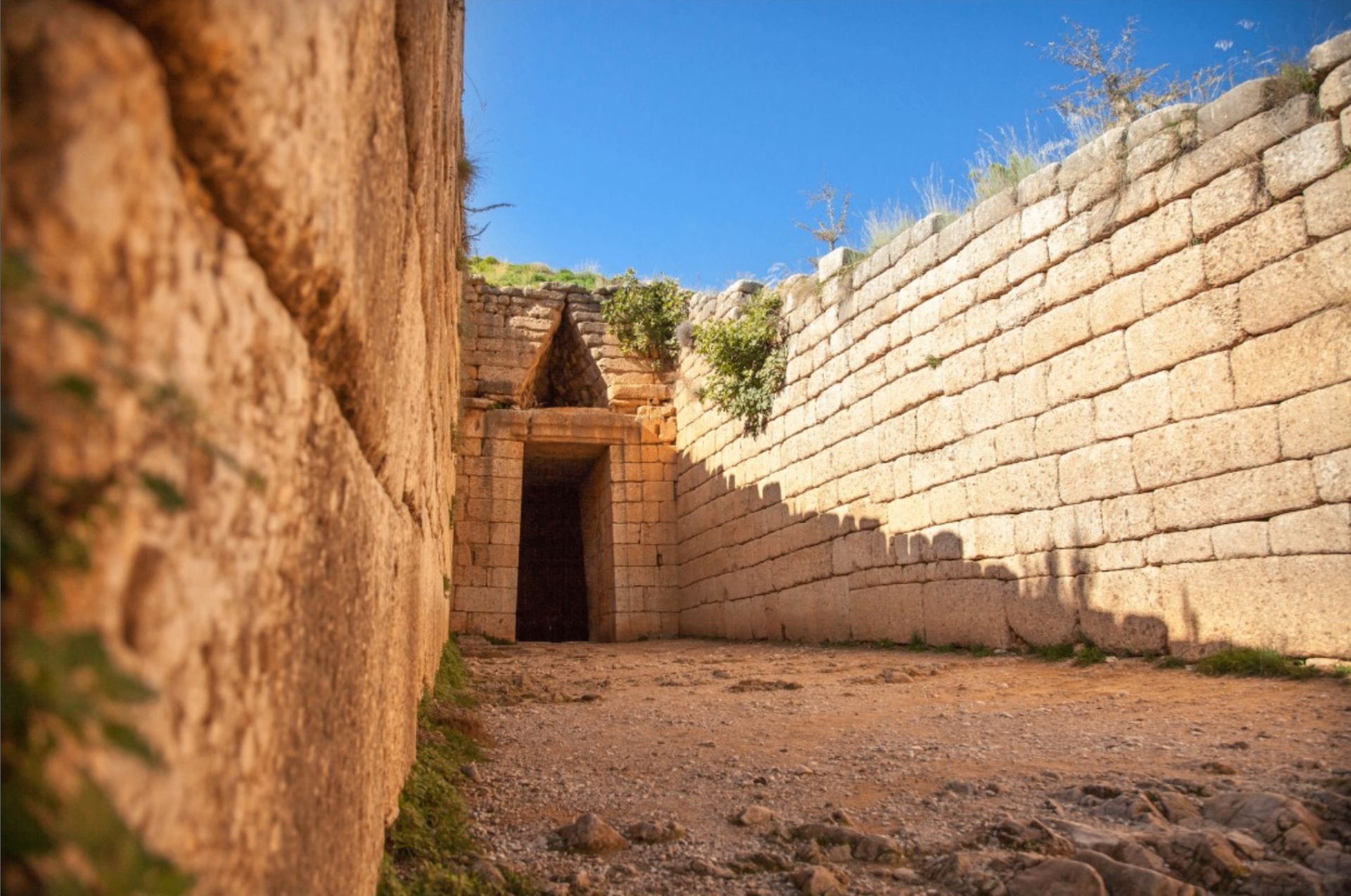
- The Treasury of Atreus — a Late Bronze Age tholos tomb with a 14.5 m corbelled dome that held the European span record until the Pantheon was built in 126 AD.
- Grave Circle A — the royal burial enclosure where Heinrich Schliemann excavated the gold death masks in 1876 (the originals are in the National Archaeological Museum in Athens).
- The on-site museum — Linear B tablets, frescoes from the cult centre, and a high-quality replica of the Mask of Agamemnon.
- The cyclopean walls — built from limestone blocks weighing up to 20 tonnes; ancient Greeks believed only the Cyclopes could have moved them.
Driving from Tolo, step by step
Leave Tolo on the EO70 north toward Nafplio. Skirt Nafplio on the western bypass and join the EO7 toward Argos and Corinth. After 8 km a brown sign reads 'Μυκήνες / Mycenae' — turn right. The road climbs gently through olive groves for 3 km to the free site car park. Total drive time door-to-door: 28–32 minutes outside rush hour.
Combine your visit with…
Most guests pair Mycenae with lunch in the modern village of Mykines (Spiros and Iphigenia both serve solid lamb and pastitsio), or push 20 minutes further to the Heraion of Argos — a far quieter Bronze Age sanctuary with sweeping views over the Argolic plain. Epidaurus (Επίδαυρος), the famous ancient theatre, is on the opposite side of the peninsula — best treated as a separate evening trip with a concert at the Athens & Epidaurus Festival (July–August).
Tickets and practicalities (2026)
- Combined ticket for the citadel + museum + Treasury of Atreus: €12 full / €6 reduced (EU students, seniors). Confirm at odysseus.culture.gr before travelling.
- Free admission on the first Sunday of November–March and on certain national holidays.
- Wear closed shoes — the stones are uneven and slippery after winter rain.
- No shade at the citadel. Hat, 1 litre of water per person and SPF 50 are non-negotiable in July–August.
- Allow 2 hours for the citadel and 45 minutes for the museum; the Treasury of Atreus is a 5-minute drive back toward the village.
- WC and small café at the car park; no food inside the site.
A little context, before you go
Mycenae gave its name to an entire civilisation — Mycenaean Greece — and the deciphering of the Linear B tablets found here in the 1950s proved that the language of Homer's heroes was an early form of Greek. Standing inside the Treasury of Atreus, in a chamber engineered 3,200 years ago to outlast everything around it, is the kind of moment that flat photographs cannot do justice to.